The IDC numbers for Q1 2012 are out, here's the summary: "For the quarter, the total disk storage systems market posted just under $8.0 billion in revenues, representing 6.8% growth from the prior year's first quarter. Total disk storage systems capacity shipped reached 6,037 petabytes, growing 20.8% year over year."
Read the comments from "Computerworld" and "The Register".
Wednesday, June 20, 2012

Monday, June 4, 2012
June I

IBM's "Smarter Storage" announcements today!
According to this article in CW, "the National Center for Supercomputing Applications is rolling out a storage infrastructure that will include 380 petabytes of magnetic tape capacity and 25 petabytes of online disk storage made up by 17,000 SATA drives."
I think this is noteworthy for two reasons:
a) they realize that they cannot afford to keep all the data on spinning disk, so they provision about 95% of the data storage using IBM TS1140 tape drives and media (has someone invented the term "Tape Provisioning" already?)
b) the storage will be connected to the servers using 40 Gbps Ethernet, not sure if they actually use FCoE or something else (like AoE: ATA over Ethernet), but it still shows a trend towards high-speed converged networks. Ethernet has a great potential there with its 40Gbps and 100Gbps standards and roadmap!
In that project, they use the Lustre file system as the above article lines out. But they might as well have looked into using GPFS: IBM just announced the Rel. 3.5 with many enhancements as outlined here.
As you probably know, IBM uses the GPFS file system in many of its current storage offerings, like the TS7700, SONAS and most recently the Storwize V7000 Unified. So we can expect to see the functions outlined in GPFS 3.5 implemented in these products as well! Watch this space!
And to conclude todays excursion into the Big Data space, here's an article from Jon Toigo which outlines quite nicely, what the difference between "lots of data" and "Big Data" is: “Big Data analytics help you make sense of what you are observing while you are observing it. You glean knowledge from data as quickly as it arrives — in something like 200 milliseconds – rather than waiting to batch process the data and produce a report.”
Monday, May 21, 2012

Monday, March 26, 2012
April
Two update topics today. Tape and HDD!
Tape first:
Tape first:
- a market report on LTO Media (cartridges) sales.
- an article about object storage and tape (and why they might want to reconsider tape).
- an update from the March San Francisco "Tape Summit" and why "the tape industry should stop making excuses and instead raise its head with pride. Tape is great for archiving and nothing else comes close. In fact the gap with disk competition is going to widen in tape's favour".
- Is HAMR the solution to enable the next breakthru in density for HDDs? Seagate announced a potential 60TB disk drive last week using that technology!
- And will manufacturing of HDDs ever be brought back to the US (or Europe for that matter)? This is an interesting question raised when we realized how depending the HDD industry (and thus the IT industry as a whole) have become on regions like Thailand that produce an overwhelming percentage of the worlds supplies of HDDs.

Wednesday, March 14, 2012
March II
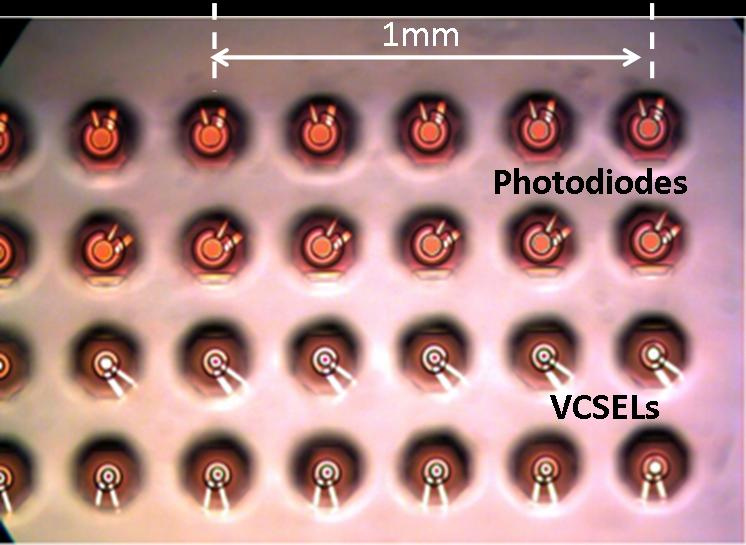 This weeks news are about files, tape, optics, and how they all -when combined- can help solve data-growth problems!
Data growth is reflected once again in the 2011 IDC report: "Total disk storage systems capacity shipped reach 6,279 petabytes, growing 22.4% year over year." This is still a huge growth, however, compared to the 2010 and 2009 numbers (56% and 34% compared to the previous year!) they reflect not only the production shortage due to the Thailand flooding in Q4, but also the fact, that capacity expansion with HDDs has considerably slowed down in the last three years. Find additional comments here.
Related to that report, IDC has also released the Storage Software numbers for the full year of 2011. They reported worldwide storage software sales of over 14 billion USD, an increase of almost 12% compared to 2010!
Most of the client investments for HW and SW theses days go into file storage, the area of unstructured (and too often also uncontrolled!) data. This is causing havoc to traditional methods of managing and operating enterprise storage and may force businesses to look into revolutionary new ways of dealing with information (once more!), as outlined in this ESG article: "People risked “everything” when they ran from big companies like DEC to a little goofball company like Microsoft. They risked their jobs when they didn’t buy storage from Big Blue and instead went with unheard of EMC. They risked their ponytails and birkenstocks when they bought “toasters” from NetApp".
But beware, just "any cloud" won't do it!
How does tape come into the play? Well, read here about a smart new way to combine the ease-of-use of NAS and the low-costs of tape data. And read here why many in the industry are convinced that tape still has some great potential!
Lastly, from research, I came across two exciting news items:
The IBM Research Hall of Fame has two new members: Lubomyr Romankiw and David Thompson were both honored for their achievements around magnetic memory innovations which enables many of today's HDD products. And related to very recent research, IBM released news about a break-thru in optical data transfer, using a device dubbed "optochip", see details here.
Tuesday, March 6, 2012
March
 Let me summarize what I felt was the most interesting news and articles since we started 2012:
Windows 8 will be out later this year and Microsoft is working on new concepts of managing pools of storage, referred to as "Storage Spaces". Read details here.
For those, who do not want to manage their own storage or backup data, Amazon has started to offer backup options with their S3 cloud offering: "Amazon promised its gateway would let you upload data to its cloud securely and also provide them with cost effective and low-latency back up and rapid disaster recovery."
While Infiniband is getting more traction as an intra-systems connectivity method with many storage vendors, Qlogic has decided to sell off their Infiniband business to Intel. Which means, that there are now only two Infiniband vendors left in the market. Intel and Mellanox.
Im terms of storage media, the article here raises some valid concerns about the future viability of SSDs as a basis for enterprise storage systems: "While the density of SSDs grows and the cost per gigabyte shrinks, everything else about them is poised to get worse."
So we may be ready to use a new proposed candidate for ultra-dense and cost efficient storage: The 12-atom storage.
And lastly about Big Data: If you are like me and ever wondered what the Elephant/Hadoop has to do with big data, here's an excellent little video from IBM Research: Big Data and Hadoop in 15 minutes!
And because big data requires big disks and big disks have their unique challenges with legacy RAID technology, IBM is working on new declustered RAID architectures, a software RAID implementation of redundant data blocks across dozens to hundreds of HDDs (or SSDs for that matter).
Thursday, January 5, 2012
January

Happy New Year!
Let's start off the new year with some thoughts who might be driving our industry in 2012.
CNN just announced their "Four Horsemen of Tech" for 2012 which noteable inlcudes a "Horsewoman" representing a very old company as well: IBM! Can you identify the other three guys?
And for startups of the year, here's the list from the "Storage Newsletter".
Subscribe to:
Posts (Atom)

 Posts
Posts


